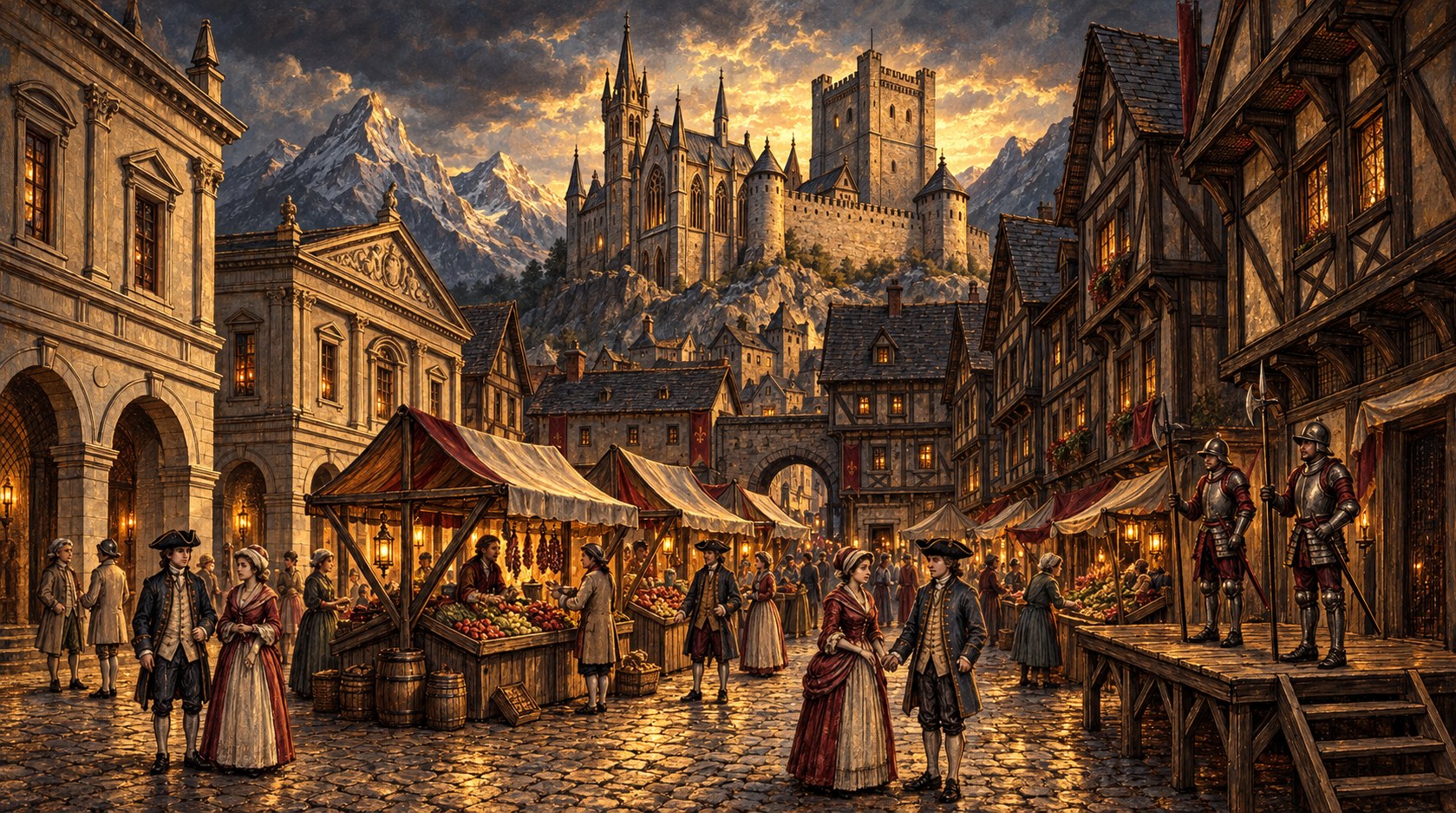

The war beyond the walls
Albion and Terrassia have spent a century bleeding one another dry. Peace is politically necessary, economically terrifying, and morally compromised from the first page.
Enter Kormor Kirak, a mountain city ruled by a vampire queen, haunted by necromancy, and caught between exhausted empires that no longer know how to stop fighting. Explore the setting through quickstart rules, lore books, starter adventures, character materials, and table-ready play aids.
The Eternal Court is built around tension: rationalist empire versus ancient power, machine precision versus ritual horror, and public diplomacy versus private hunger.
Albion and Terrassia have spent a century bleeding one another dry. Peace is politically necessary, economically terrifying, and morally compromised from the first page.
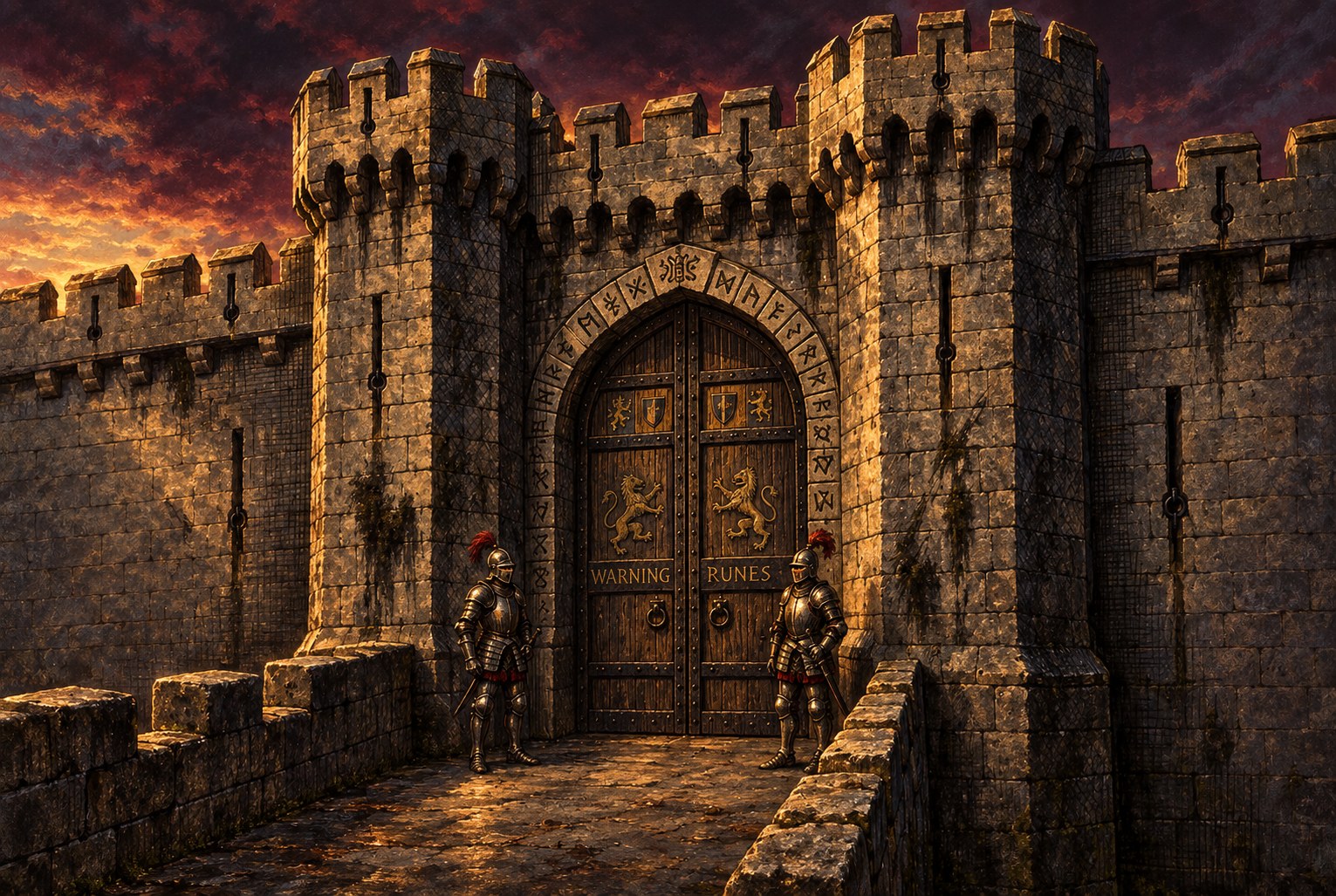
A walled trade city in the Videk mountains, where wards are painted on doorframes, Red Guards patrol the streets, and every district carries a different bargain with power.
Clockwork contraptions, vampire sovereignty, lich-cult conspiracies, and exhausted nineteenth-century aesthetics all sit in the same room here, and none of them are comfortable together.
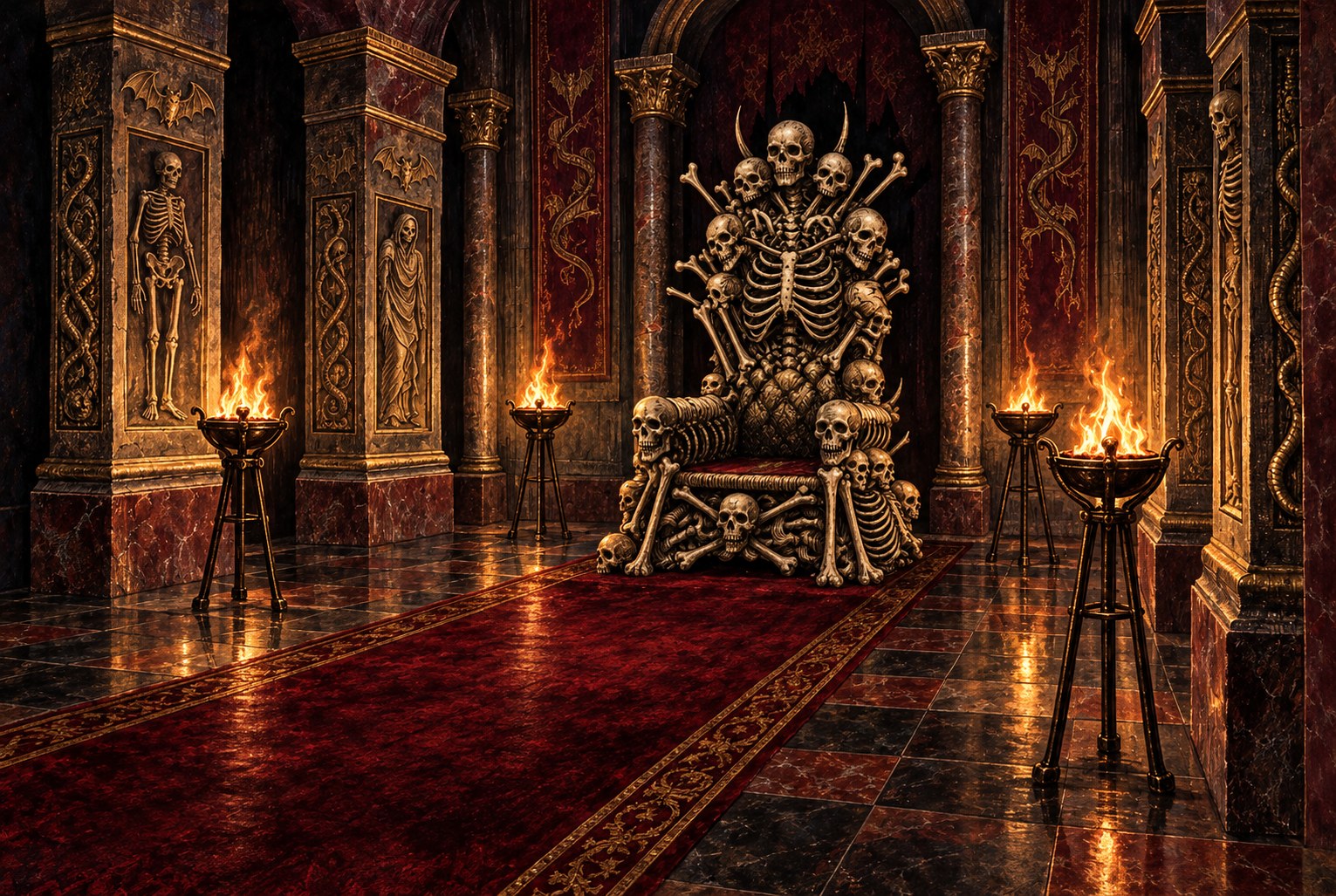
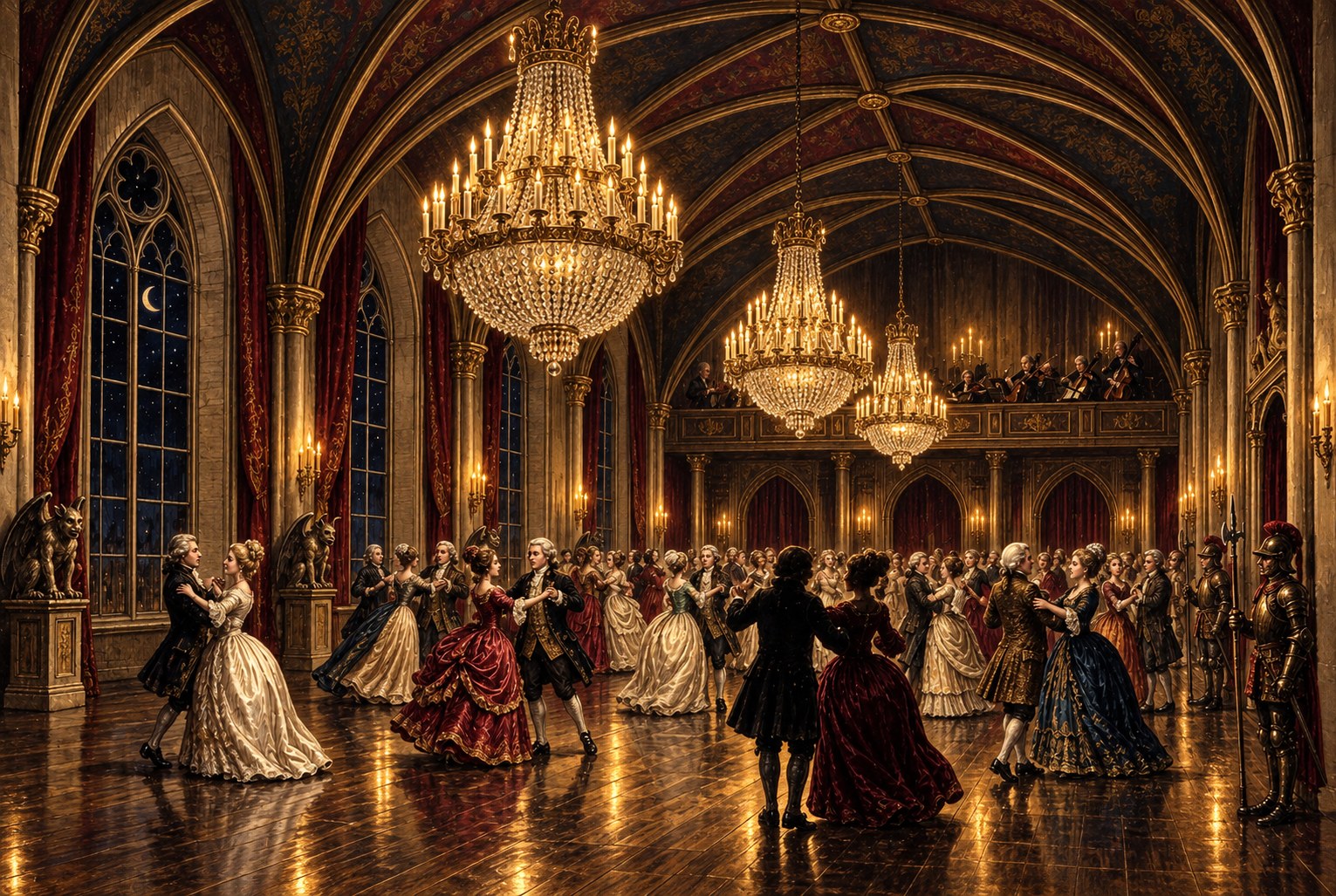
The castle is both symbol and machine: a diplomatic stage, a feeding ground, a prison, and the architectural expression of Kiraline's reign. Ballroom excess sits directly above dungeons, ritual chambers, and rooms no visitor is meant to survive.
The books and guides gathered here expand that geography into room-by-room, district-by-district play space for readers, players, and game masters who want to explore the city in depth.
The emotional pull of The Eternal Court comes from characters who are all compromised in different directions, even when they are trying to do something generous. Select a character below to bring them into the spotlight.
Olivia begins with faith in systems, in arithmetic, and in the promise that duty will protect her. Kormor Kirak dismantles that certainty piece by piece, forcing her to confront a world where pattern recognition reveals corruption instead of order.
“Her lie: the empire is just. Her truth: the systems she trusted may be the mechanism of the harm.”
This library is organized to help you find the right starting point, whether you want the original story, a quick way into play, or a deeper dive into the setting.
Lead with the quickstart, the starter scenario, session-zero guidance, and the escalation tools that help a table get moving without reading the entire setting library first.
These materials are practical rather than promotional: handouts, read-aloud text, rumors, NPC references, sensory prompts, and shop inventories built to speed prep and enrich session play.
The lore collection gathers the main world books, city and castle guides, enemy references, tonal guidance, and the campaign context that gives the setting its depth.
Browse the core documents behind The Eternal Court, from the original pilot and quickstart rules to campaign references, adventures, and table tools.
Reign of Blood is the original television pilot that introduced the characters, relationships, and dramatic tensions that later grew into The Eternal Court.
A compact introduction to Kormor Kirak, the core engine, modes of play, and the assignment-driven structure of the setting.
The Butcher of Kereskedo is a ready-to-run introductory adventure designed as both first session and template for future field-report scenarios.
The broadest setting volume, establishing the world's tone, political pressures, visual language, and the particular contradiction at the heart of The Eternal Court.
Play-facing and table-facing support docs, character material, and practical GM aids.
A concise tone, safety, and campaign setup document for aligning the table before play begins.
A six-phase progression for the Queen's plan, with visible changes, hidden developments, and branching pressure points.
Printable in-world artifacts, letters, decrees, receipts, and coded documents designed to be handed directly to players.
Setting rumors, leads, and unreliable truths for improvisation, red herrings, and player-driven investigation.
Drop-in prompts for smells, sounds, textures, and scene color when you want the city to feel immediate.
A larger bank of table-ready descriptions for locations, reveals, arrivals, and dramatic environmental beats.
The main cast translated into 5E-compatible builds, including player characters, key antagonists, and supporting stats.
The same cast rebuilt for Daggerheart, emphasizing domains, traits, and the system's hope-and-fear structure.
A dense reference for what major figures know, suspect, hide, or can reveal as the conspiracy unfolds.
An interconnection guide for loyalties, pressure points, secret alignments, and emotional fault lines across the cast.
Merchants, gear, occult curiosities, and story-hooked objects that turn buying things into worldbuilding instead of bookkeeping.
The deeper setting, geography, tone, bestiary, and campaign-facing lore behind the city.
The foundational setting guide: history, politics, geography, and the emotional weather of the world.
Character-focused lore with psychological texture, motivations, contradictions, and campaign implications.
The GM-facing volume covering tone, safety, campaign running, and the darker truths behind the setting.
A broad, practical campaign reference spanning factions, diplomacy, supernatural forces, and playable campaign context.
Torony Piros broken down into approach routes, ceremonial levels, private chambers, towers, and what lies below ground.
Districts, embassies, marketplaces, shops, NPC pockets, and scenario hooks across the city itself.
Street-level threats, undead horrors, military forces, constructs, encounter tables, and scalable adversary groupings.
A quick but high-value reference on the exact flavor of gothic gaslamp fantasy this setting is aiming for.
A compact rules-forward booklet for readers who want the fastest way into the game and the setting.